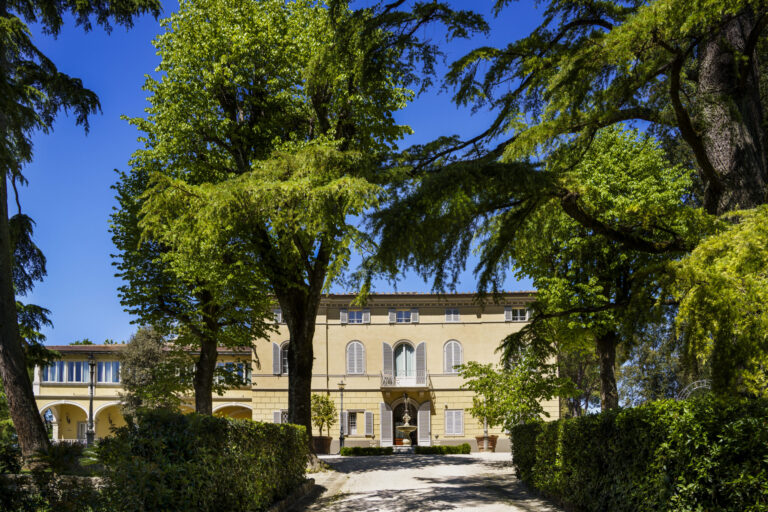
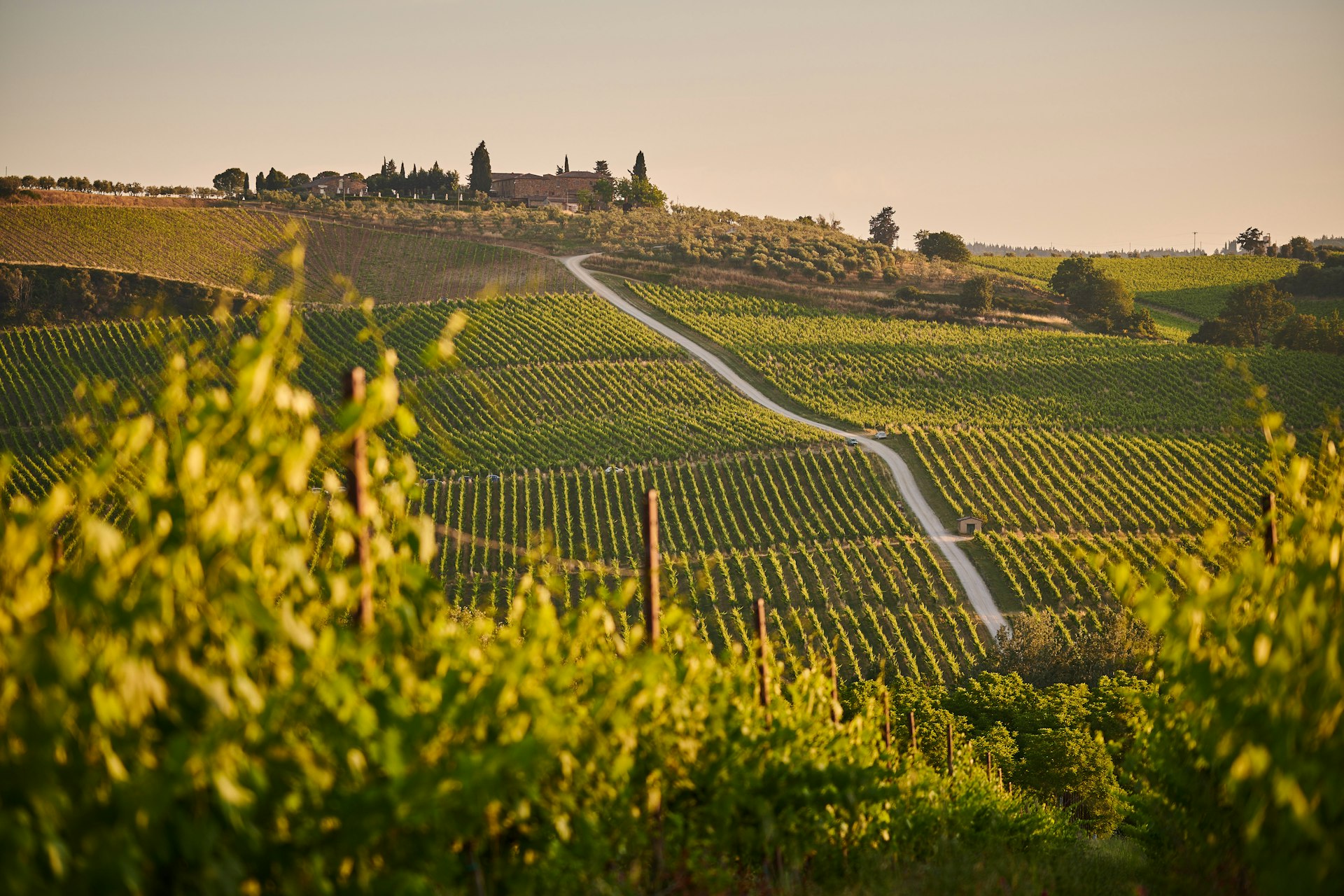
Chianti Classico is a DOCG wine (Denominazione di Origine Controllata e Garantita, Italy’s top wine classification) made with 80 to 100 percent Sangiovese grapes, in a zone of about 71,800 hectares split between the provinces of Siena and Florence. The wineries on the Siena side, around Castellina, Radda and Gaiole in Chianti, are less than an hour’s drive from Villa L’Avvenire, which is 30 minutes from the Chianti road.
What is Chianti Classico and how is it different from Chianti?
Chianti Classico has its own denomination, separate from ordinary Chianti: its production zone is older and smaller, and its rules are stricter. The base wine needs 80 to 100 percent Sangiovese, with other red grapes suited to Tuscany allowed to make up the rest, up to a maximum of 20 percent. Minimum alcohol content is 12 percent.
Chianti, without “Classico,” is a separate denomination with a much larger zone covering most of central Tuscany, and looser rules on the Sangiovese percentage.
In the glass it’s a bright ruby red that turns towards garnet with age. On the nose it’s intense and wine-forward, with a scent of violet typical of young Sangiovese. On the palate it’s dry, savoury and lightly tannic, with tannins that soften over time (EU register of geographical indications).
Where is the Chianti Classico zone near Siena?
The Chianti Classico zone covers the whole territory of Castellina in Chianti, Gaiole in Chianti, Greve in Chianti and Radda in Chianti, plus parts of Castelnuovo Berardenga, Poggibonsi, Barberino Tavarnelle and San Casciano in Val di Pesa, across roughly 71,800 hectares (Consorzio Vino Chianti Classico). Castellina, Gaiole and Radda sit in the province of Siena, as do Castelnuovo Berardenga and Poggibonsi; Greve and San Casciano belong to the province of Florence.
For guests staying at the villa, the Siena side of the zone is the closest: the Chianti road is 30 minutes by car, and the villa has forty free parking spaces on site, so there’s nowhere to worry about leaving the car when you get back.
Why is a black rooster the symbol of Chianti Classico?
The Gallo Nero (black rooster) is the historic mark of the Chianti Classico consortium, founded on 14 May 1924 in Radda in Chianti, when a group of producers met to protect their wine (Visit Tuscany). A medieval legend ties it to a border dispute between Florence and Siena, settled, according to the story, by a horse race timed to a rooster’s crow. The mark was redesigned in 2013 and now appears on the bottle’s neck as a guarantee of origin.
What’s the difference between Chianti Classico, Riserva and Gran Selezione?
The rules set out three tiers, which differ in minimum ageing and Sangiovese percentage (Italy’s Finest Wines):
| Tier | Minimum Sangiovese | Minimum ageing |
|---|---|---|
| Annata (base) | 80% | 12 months |
| Riserva | 80% | 24 months, including 3 in bottle |
| Gran Selezione | 90% | 30 months, including 3 in bottle, estate-grown grapes only |
Chianti from the Siena side tastes better at a table than it does read off a shelf. Book on the website and breakfast is already included, at the best rate, with free cancellation up to 10 days before arrival.
Which wineries can you visit from the villa?
The wineries on the Siena side sit along the SS222, the Chiantigiana road, which links Siena to Castellina in Chianti and on to Radda and Gaiole. Many offer tastings and tours by appointment, often through the consortium’s Chianti Classico Card, which covers experiences at more than a hundred estates between Siena and Florence. It’s worth booking a few days ahead, especially at weekends and during the grape harvest, between late September and October.
Guests who would rather not drive back can arrange the villa’s private transfer with a dedicated driver, on request and with a few days’ notice.
Beyond the wineries, the two main villages are worth a short walk. Castellina in Chianti has the Via delle Volte, a covered medieval walkway that follows the inside of the town walls and comes out onto the village’s main street (Italia.it). Radda in Chianti has a compact historic centre built around the town hall, with the stone coats of arms of former governors on its façade. Half a day is enough to combine a walk through one of these villages with a visit or two at a winery.
What should you order to go with a Chianti Classico?
Chianti Classico pairs well with the meat dishes of Siena’s tradition: bistecca (steak), wild boar stew, pici pasta with meat ragù. Aged pecorino cheese, served with honey or fruit preserves, is another classic match in the area’s trattorias.
The villa’s own restaurant follows the same line, with Mediterranean cooking and traditional Italian dishes: open for dinner from 7pm to 10pm, closed on Mondays and Tuesdays. Tables can be booked at book-a-table-en, including for guests not staying overnight.
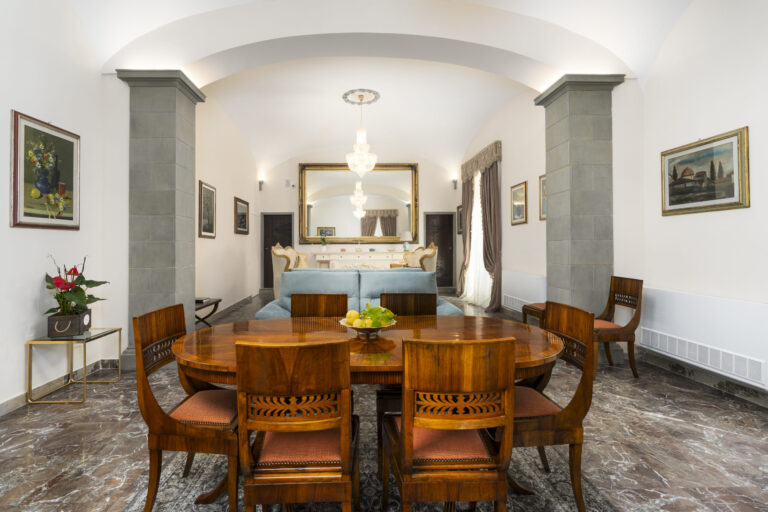
For a longer stay, the villa’s eleven rooms and suites, from 21 to 180 square metres in the Imperial Suite, make a convenient base for moving between Siena and the Sienese Chianti: all with air conditioning, a minibar and free Wi-Fi (rooms and suites). Driving directions, including the nearest motorway exit, are on the how to reach us page.
A stay in the Sienese Chianti starts with a comfortable base to come back to in the evening. Every room has free parking on site and breakfast included when you book on the website.
Frequently asked questions
What is Chianti Classico?
It's a DOCG wine made with 80 to 100 percent Sangiovese grapes, in a zone of about 71,800 hectares between the provinces of Siena and Florence.
What's the difference between Chianti and Chianti Classico?
Chianti Classico has a smaller, older production zone and stricter rules on the minimum Sangiovese percentage than ordinary Chianti.
Which municipalities near Siena are part of the Chianti Classico zone?
Castellina, Gaiole and Radda in Chianti sit entirely within the province of Siena, along with parts of Castelnuovo Berardenga and Poggibonsi.
How far is the Chianti road from Villa L'Avvenire?
About 30 minutes by car, with forty free parking spaces on site and no booking needed.